Das Weinviertel

Reposting this old blog, which has become ever more meaningful to me as pandemic travel restrictions and the impediments of impending old age make it less and less likely that I’ll get back to Austria as much as I would like.

*

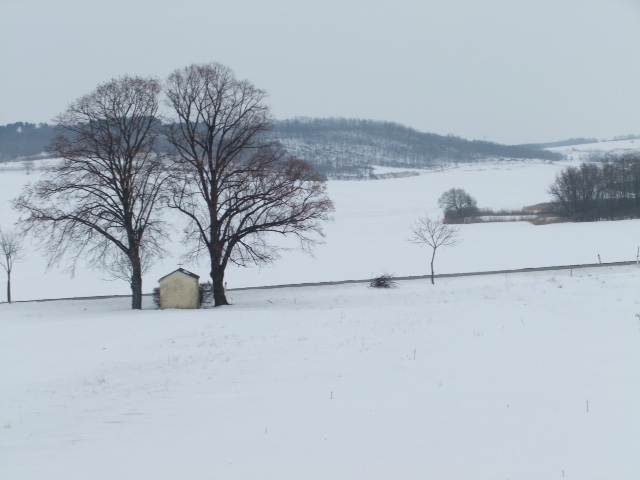
Das Weinviertel – near Mistelbach, Austria

15 February, 2010

Up near the Czech border no more than an hour from Vienna lies the homeland of Grüner Veltliner, the simple but scrumptious Austrian white you can rely on in almost any bar in the country.

I unknowingly discovered Veltliner in 1973, when long-lost Viennese friends took me out to a Heuriger for a memorable long day’s excursion into night, the details of which I can no longer remember, probably couldn’t even the next morning, except I know that the wine was delicious and flowed without restraint

There is a whole piece to write on what friendship means in Austrian German. This is just the part of it which has to do with wine.

For those who interested in the wider question, what role friendship (here male but there is a female counterpart) plays in Austrian culture, one place to begin would be Thomas Bernhard’s Wittgenstein’s Nephew: A Friendship, among my favourite books, though I hesitate to recommend it to anyone who reads for pleasure.

We could take Bernhard’s “fiction” as the story of the relationship — “Friendship” in the title is both perfectly accurate and scathingly ironic — between two eccentrics, a universal tale which belongs to humanity, and to inhumanity as well. This would be to divest both men of what Thomas Bernhard himself spends much energy denouncing, the sometimes grotesque Austrian garb of their neurotic lives.

The alert reader will immediately grasp where this thought leads, since if friendship is not a universal which humans experience more or less in the same way, than many other presumably noble human ideals are not as well, for example love, already fraught enough when lines of communication are not scrambled by language and different cultural expectations, or hate, or altruism, or bravery, or the difference between bravery and bravado, whatever their equivalents might be in given languages, if those translations can even be found.

I come around to the notion of bravado because of the chain of circumstances which looped me from drinking Veltliner in 1973 back to drinking it in 2010, in the latter case with a shock of recognition but in the former, now it almost seems, with a strange prescience across time and space.

That I found myself back in Austria in 2010 with glass of Veltliner in hand was due to a pivotal incident I can single out, the flippant challenge thrown out at the end of a boozy dinner in May, 2002, that I return to Innsbruck to ski the next winter –”if I had the nerve.”

It was like a hot button. The Texas macho side of my self, which I have for years striven mightily to rein in, suddenly succumbed to inviting echoes, sirens I could hear reverberating up across the stunning slopes of the Alps above Innsbruck, though that was late at night under moonlight and not, as in this photo, on a glorious  afternoon of Foehn.

Seegrube above the rooftops of Conradstraße, Innsbruck (18.02.2010). Telling contrast between the kitschy façades and the untramelled, fractal facets of the slopes above.  


I had never been a skier, except on water. There is not a lot of snow in Texas and during the year I spent in Grenoble, 1966, I was chronically without the financial ressources to learn. Those among the foreign students I knew then who could afford to ski were scions of Vietnamese bankers who enjoyed reminding me that in just another year or two I would be drafted off to defend their freedoms in South-East Asia, while they could continue to ski in the Alps, studying law or business or whatever on the side, their checks flowing without interruption from Geneva, their ski passes annual.

All it took in 2002 was the barest hint of a dare from my new Austrian acquaintances, Fritz and Bernhard, for me to detect and lock into a routine familiar from the hazing of adolescent rites of passage in Texas. I recognized a behaviorial language I could speak,  the terms of which are bravado, at least the posture of such, one-upsmanship, substance abuse, but also a surge of comradery I had not felt for decades, peels of laughter and shared mockery of self and others, bullshit mixed with the Absurd, surrealism and tall tales (Scheißereden), palliative but disposible philosophies of life I had forgotten the use of, intimate bastions of reprieve from self-righteousness, Selbstgerechtigkeit, the ineradicable vice of right-thinking Texans and proper Austrians, people who seriously need help and will not get it.

Alcohol is a toxin, as professional busybodies remind us everytime they have a chance, as if anyone with a smattering of self-consciousness were not fully aware of this, and from an early age.

Among the alternative agents of alcoholic intoxication, wine offers the most compensatory blessings. Its panoply of tastes and odors connect in mysterious ways with olfactory, gustatory and pheromonal agents sourced from the gamut of plants and flesh we savages consume.

What the puritans do not want us to understand and then say aloud is that the dislocation of experiences and values alcohol wreaks is also sacred in impact, wine and the gods having been linked from ancient times.

Alcohol etches into memory simulacra of the sacramental and nepenthic gestures humans seek in their most vaulted religious and communal rituals, but this potion is readily available on a daily basis, and in portable containers. Though we seek out and pay for alcohol, we do so gratuitously, for no good reason, not because a doctor says it is good for us, as we do compulsively, addictively with the copious output of the pharmaceutical industry, but because we just don’t care about what makes sense nor what might be the right thing to do.

Wine has, in addition, a special – I hesitate to use the word – psychedelic function, rendering up perception of aspects of one’s mind previously unknown.

Proust’s cup-cake would be a rudimentary metaphor for what happens when a slurp of wine courses across the tongue and sloshes along the palate, at least for the wine lush who is used to detecting entrancing traces of memory locked into vinous molecules, who has learned to decrypt the kaleidoscope of sensations triggered by thousands, no, millions of prior taste experiences scattered across a lifetime and now suspended in a fragile but vital web of pulsing associations in a colloidal medium neuroscience still knows basically nothing about, despite its pretentious soup of acronyms.

This I do know: our forebrain or left brain or whatever soggy lobe of it is charged with repression actively works to suppress the flow of imaginative energy along these ecstatically ramifying synaptic meshes. Then the wine comes along, blasting away the log-jam of repressed memories with explosive packets of savour, merciful manna which lifts us from the drudgery of our own petty, goal-oriented rationality.

My friend Bernhard, the same who pointed up at the slopes of Seegrube in May, 2002, recently bought an abandoned wine cellar in The Wine Quarter in Lower Austria (das Weinviertel). He took me there on a day trip up near the village of Mistelbach (Mistletoe Brook). The cellar is a monument to a way of life rather than a working site, though a great place to store wine, even in the depths of winter.

Behind me you can see wines covered with a foot or more of snow.
Bernhard kept talking about coming up in the summer, pitching a tent, hanging out and guzzling Veltliner, grilling sausage on an open fire. He didn’t mention swatting mosquitos or shitting in the bushes. I am not sure that the true taste of Veltliner is not best to be enjoyed in winter, when the roots themselves sleep peacefully under the warm blanket of snow, preparing the next year’s vintage, secretly imbibing minerals from the soil without the brazen interference of the sun – all that dreadful, bright green and distractingly busy photosynthesis summer brings.

Bernhard with a bottle of Tuscan red retrieved from the cellar, and the keys to his kingdom

My Black Orpheus

[I’m reposting this ten year old piece which has become oddly relevant again]

I had been meaning to start as follows:Years ago on what seems another planet and likely one of the first times I was allowed to take our family car out alone,  I drove over to the near north side of Houston to the Al-Ray Theater and saw Black Orpheus. The trailer here  is in French, which I was starting to understand, though the film was in a language I had neverf heard before, Portuguese, which continues to


feel like I should always have spoken it. This was before the Al-Ray went porn, slipping, back in the Golden Age of Houston cinema palaces, from “Fellini to Deep Throat,” as a 1975 piece in the Texas Monthly put it (p. 72). At that point in time Houston was already the seventh largest American city with more or less a million within its legal limits, and burgeoning. I have long given up trying to explain that, coming from Houston, I didn’t exactly come from nowhere. 

Before major U.S. distributors began to pick up and monopolize prize-winning foreign films, which thereafter became unaffordable to Al and Ray, the two entrepreneurial brothers who ran the neighborhood movie-house, the Al-Ray was the premier venue for a slew of foreign films. I saw, many at the tender age of eighteen, parsing out and tentatively pronouncing their titles in French and Italian: Les 400 coupsÀ bout de souffleAscenseur pour l’échafaud (where I probably heard Miles Davis for the first time), La dolce vitaL’avventura, Rocco e i suoi fratelli . The last one starred that sex-god, Alain Delon, whom I imagined I resembled, and was so assured by a less-than-objective potential male lover who did not, however, score. Here I want to tell how in a single evening Black Orpheus decisively shaped who I have become. 

I can’t claim I would never have taken up classical guitar without having seen Black Orpheus and then bought the LP, one of the first I owned. There was a guitar in the house, Dad played, so it was perhaps natural that I ended up getting one and taking it to Africa in 1967, this at the same time I began studying Portuguese and where I met my friend Alfredo Pons, a Peace Corps volunteer who played a number of amazing bossa pieces. From the beginning, my guitar repertoire, such as it is, always included the Brazilians, starting with Villa-Lobos. Just this morning I was playing Baden-Powell, his Retrato brasileiro (Brazilian Portrait) and Valsa sem nome (No-name Waltz). Over and over I have returned to the music of that period and, in 2000, I published the article which must now stand as my definitive study of the poetry conveyed therein: Cannibalizing Bossa Nova. A few years later, I had practically set out on a study-tour to Brazil and Venezuela with my guitar on my back in search of the spirit of Bossa Nova, as some overwrought staff writer for University of Alberta Folio put it. Alas, that plan was scotched by my appointment as Dean at Ottawa in 2004. It might yet be revived. 

This just scratches the (musical) surface. First and  foremost, I had never seen and would not for several more years see a film whose cast was black, let alone one whose lead actress was as captivating as Marpessa Dawn, actually born, I learned much later, in Pittsburgh, and part Filipina, though she performed in Portuguese and was considered a French actress. Things are almost always more complicated than we believe. 

I am familiar with academic theories of race and sex, sexualized race, racialized sex, so I know perfectly well Marpessa Dawn was preceded in my psyche by many other black female figures of illicit lust. Her demure beauty nonetheless opened avenues of desire and a mode of yearning I had never conceived of before ….

*

I was going to write all that and more, but then, Googling for clips, I discovered that Barack Obama had already addressed the topic in Dreams from My Father. Having merely leafed through his book, I had missed this reference, one well-discussed, I now know, on the internet and which links me not to him — he is young enough to be my son — but to his mother, a woman only three years older than I and with whom I have a strange generational and cultural affinity.

Here is the passage in which Obama describes his reaction to seeing his mother watch what was the first foreign film she had ever seen:

One evening, while thumbing through The Village Voice, my mother’s eyes lit on an advertisement for a movie, Black Orpheus, that was showing downtown. My mother insisted that we go see it that night; she said that it was the first foreign film she had ever seen.

“I was only sixteen then,” she told us as we entered the elevator.  “I’d just been accepted to the University of Chicago – Gramps hadn’t told me yet that he wouldn’t let me go – and I was there for the summer, working as an au pair. It was the first time that I’d ever been really on my own. Gosh, I felt like such an adult. And when I saw this film, I thought it was the most beautiful thing I had ever seen.”

We took a cab to the revival theater where the movie was playing. The film, a groundbreaker of sorts due to its mostly black, Brazilian cast, had been made in the fifties. The story line was simple: the myth of the ill-fated lovers Orpheus and Eurydice set in the favelas of Rio during Carnival. In Technicolor splendor, set against scenic green hills, the black and brown Brazilians sang and danced and strummed guitars like carefree birds in colorful plumage. About halfway through the movie, I decided that I’d seen enough, and turned to my mother to see if she might be ready to go. But her face, lit by the blue glow of the screen, was set in a wistful gaze. At that moment, I felt as if I were being given a window into her heart, the unreflective heart of her youth. I suddenly realized that the depiction of childlike blacks I was now seeing on the screen, the reverse image of Conrad’s dark savages, was what my mother had carried with her to Hawaii all those years before, a reflection of the simple fantasies that had been forbidden to a white middle-class girl from Kansas, the promise of another life: warm, sensual, exotic, different.

I turned away, embarrassed for her, irritated with the people around me.

(Dreams from My Father, p. 123 ff)

*

I would stand guilty of similar naïveté if accused but, as Obama knew somewhere, he would not have come onto this planet without the desire this film raised in his mother. Obama’s own dreams are from his father, but hers were of the man.  And, lest we forget, his father had his own dreams of her and Obama’s paternal grandfather was absolutely opposed to having “the Obama blood sullied by a white woman” (p. 126).

As for myself, I suspect that without Black Orpheus I would never have shored up in West Africa, guitar by my side and – look down in the lower right-hand corner — my Portuguese language-learning set of LPs at my feet.


This photo was deliberately staged, intended to convey several points to the folks back home, for example, those tokens of poetry: the dictionary on the folding chair and the volume of Rimbaud in my hand – Rimbaud, who notoriously abandonned poetry at age twenty and later spent his last years in Africa, a subliminal threat I did not keep.

Framing the miniature kora on the wall across from my guitar made both implicitly interchangeable and hence equal. And, yes, the robe, which I still possess, is gorgeous.  Wearing the clothes of “Others” is not an expression of deviant exoticism, rather of acceptance of them, willingness to share bodily sensations, as it were. There is no embrace more intimate except the one without clothes.

The pathways to understanding others are obscure, unpredictable, fraught with inauthenticity.  If we remain totally and exclusively authentic to our selves as we have already defined them, will we ever be able to learn or to change?

Without Black OrpheusI would probably never would then have gone on to commit to the study and promotion of African and Brazilian and Afro-Caribbean literature (in for example, Entwisted Tongues), plus twenty-five years of involvement in and service to the African Literature Association and its French counterpart, A.P.E.L.A.  Without Black Orpheus, I would never have been able to owe Africa as much as I do, just as Brazil does – and I shall spare you, for now, my comments on how much the U.S. and in particular the South owes Africa, and I am not talking about reparations.

But when, at the end of the film, the next young Orpheus-to-be himself makes the sun rise over Rio by playing Manhã de carnaval, a piece he had learned from the departed Orpheus, the hidden message is not that blacks are child-like with an inborn gift for dancing (Obama notwithstanding), instead that the mythic cycle of desire and loss always begins anew, desire and loss coming garbed in as many guises as there are peoples in world.  

I am lucky to have seen Black Orpheus as a impressionable young adult. Obama is lucky his mother did.