The Book-Fairies

images

Mother always warned me about the book-fairies. I held them in greater awe than even the Christian God during the two brief phases in my life when I did live in fear of Him, first at the innocent age of five when I had my tonsils and adenoids out and was discovered to be seriously myopic. Then, less innocently, after I stumbled upon masturbation and became persuaded that each instance of the strange and compulsive spasms it occasioned was cause for dire punishment, perhaps the gruesome deaths of my parents when they were out and I was baby-sitting the younger siblings, or something yet worse for which I would be responsible.

The book-fairies were aligned on the side of illicit pleasure, on books and reading, my first solitary vice, one in which I sought refuge well before the adolescent surge of hormones enabled a second private gratification. But the book-fairies could wreak Furies-like vengeance on whoever might unwisely harm books.

Dogging of ears, writing in ink, defacing or stressing in any other way the pages or the binding of a book were all infractions beyond appeal. Librarians, past whom it was possible to slip inadvertently damaged volumes, were a comparatively forgiving bunch, and in any case not privy to the immediate scenes of crime, as were the book-fairies who constantly spied through my own eyes to catch the slightest transgression.

It might be possible to construe this inner censorship as quintessentially Protestant, though the brand of Protestants I knew then were hardly bookish — barely literate, actually.

It now also seems to me that after suffering the two aforementioned bouts of monotheism, like childhood measles and mumps, I drifted towards the practice of polymorphous animism, accepting that some daemons, not all of whom are benign, lodge within, and that I am beholden to all which are properly mine. This is perhaps why I found the Shinto underlying Aikido even more appealing than its Zen component.

Admittedly, I did not discover reading on my lonesome. I was taught to read at four by Granny, Mother’s mother, a southern iron maiden who was driven by spirits of her own, among them the urge to transmit something of her gumption to the sickly and introspective child I was, or at the very least to keep my shirt tail tucked in.  She had been a school marm before marrying in the 20s. Then, after my grandfather’s accidental death by street-car in the Houston Heights (average elevation 92 feet), she eked out the Depression as a widowed secretary on refinery row in the East End.

Perhaps it is a false memory, but I recall the process of learning to read as having been virtually instantaneous, of a piece. There are after all only twenty-six letters and, despite slander to the contrary, they more or less capture the sounds of English, though there is the problem of their orientation, pointing left as opposed to right, and their order, easily permutated and transposed. My dyslexia was mild, but affects me to this day.

In any event, the words to be found in books were vastly more numerous than those I had encountered in daily life before, and for many years. So from early on I had a large reading vocabulary to which I would resort by default, chronically mispronouncing words, having read them long before I heard them.

As for the book-fairies, to this day I inscribe marginal notes only sparingly in soft pencil, promising myself to return eventually with an art gum eraser, a product whose aroma I relish.

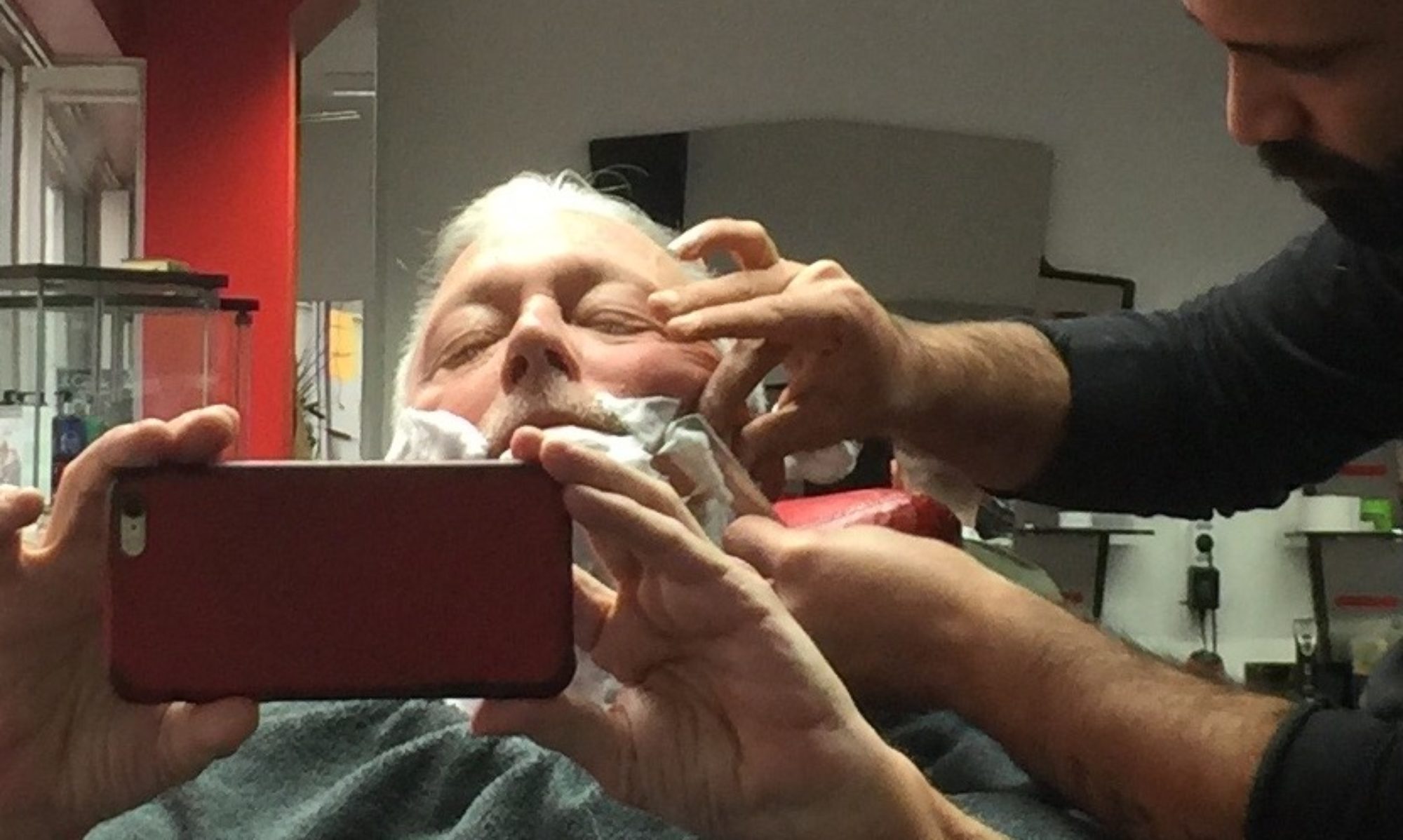
The internet will likely soon arrive, on the way to its destined dystopian perfection, to the stage where we can attach not only images and sounds but also smells to a webpage, at this very site, for example, projecting at you the reader in a subliminal molecular burst an olfactory simulacrum of crumbled art gum, no doubt the preferred votive offering of the lares which watch over books. But I suspect that most readers do not need that trigger, that ersatz madeleine. Words, maybe even a static image like that above, being up to the job.

[Revised version; originally published in The Devil’s Workshop on Bloomsday, June 16, 2010, not, alas, on Proust’s birthday]

Schlafsofa

Hätte der Plan meiner Freundin Michaela geklappt, würde ich mich während meines Aufenthaltes in Wien zu Weihnachten 1973 in ihr Schwesterlein Bettina verknallt haben. In diesem Fall würde ich selbst in aller Öffentlichkeit um sie getrauert haben, aber als Schwager, und nicht bloß als objektiver, emotionsloser Zuschauer, als der ich nämlich später, nachdem sie frühzeitig an Brustkrebs gestorben war, ihrer Beerdigung beiwohnte. Besessen von ihrer atemberaubenden Schönheit — tatsächlich wohnte sie damals in Paris, um ihre Karriere als Mannequin voran zu treiben — kümmerte sich Michaela obsessiv um das Liebesleben ihrer kleinen Schwester. Diese Manie war allem Anschein nach ein Ersatz für etwas, nach dem sie sich sehnte, was sie sich aber überhaupt nicht erlauben konnte. Keine Chance hatte ich, der ich ganz ohne Aussichten in das Rennen für die Zuneigung der älteren Schwester ging. Ihr Lebens- und Arbeitsmilieu hatte ihr eine harte Lehre erteilt. Bemerkenswerte Schönheit ist eine Ware, die man nicht beiläufig verschwenden darf. Anders gesagt, sie ist eine Bürde, für welche eine so belastete Dame sich freigiebig aufopfern muss. Das Schwesterlein litt laut Michaela nicht unter der ausweglosen Schuld dieser übermäßigen Schönheit, ungeachtet dessen, daß Bettina auf den Fotos eine eindeutige Ähnlichkeit zu ihrer unerreichbaren Schwester aufwies. Auch war Bettina ohne Aussichten, um es mal so zu sagen, und verbrachte – wie auch ich – ihre Zeit fast ausschließlich mit Gedichten und Romanen. Als daher Michaela mir vorgeschlagen hatte, über die Weihnachtsfeiertage von Paris nach Wien zu reisen, um Nutznießer der Gastfreundlichkeit ihrer Schwester zu sein, begann ich mir eine sehr erotische, aber auch literarische Fantasiewelt vorzustellen. Paris war mir sowieso langweilig gewesen. Gleich als ich das Geld bekam, löste ich den Fahrschein. Dann bezahlte ich vorsichtig eine Monatsmiete im Voraus. Alles was ich besaß und behalten wollte, packte ich in meinen Reisekoffer, welchen ich in einer Ecke meines Wohnklos abstellte, falls ich ihn später einmal nach Wien nachschicken lassen würde. Was blieb, habe ich weggeworfen, aber wie alle Menschen in meiner Nachtbarschaft habe ich diese schäbigen Güter mitten in der Nacht auf dem Trottoir heimlich hinterlegt. Früh am Morgen nahm ich dann die Metró nach der Gare de l’Est, um die vierundzwanzig Stunden Fahrt zu unternehmen, meinen Rucksack beschwert mit den Büchern, die, wie ich hoffte, mir bei der zärtlichen Verführung der Bettina helfen würden. Jedenfalls sind die von mir und auch die von Michaela unausgesprochenen, aber beidseitig anerkannten Absichten, geplatzt. Eine Woche bevor ich am Bahnsteig des Westbahnhofs ausstieg, hatte sich Bettina wahnsinnig Hals über Kopf in einen jungen Dichter aus Südtirol verliebt, der nach Wien gekommen war, um Hochdeutsch zu lernen. Nach zwanzig Jahren habe ich ihn aus der Ferne beim Begräbnis der Michaela erhascht – mit einem ergrauten Bart, glattsköpfig, und mit einer kleiner Wampe. Vermutlich hat er mich nicht erkannt, ein für ihn nur französischsprechender Unbekannter, der unbehagliche zwei Nächte lang zähneknirschend und mit von Polstern verborgenen Ohren in der entferntesten Ecke des eingeschränkten Raumes, den ich mit den beiden Geliebten teilen mußte, verbrachte. Ihrer Schwester verpflichtet, mußte Bettina mich doch gnädigerweise empfangen. So hat sie mir, so schnell wie irgendmöglich, ein Schlafsofa in einer nahe gelegenen Wohngemeinschaft gefunden. Hier beginnt meine Geschichte.

[a very short short story, revised by Anonymous — see photo below]