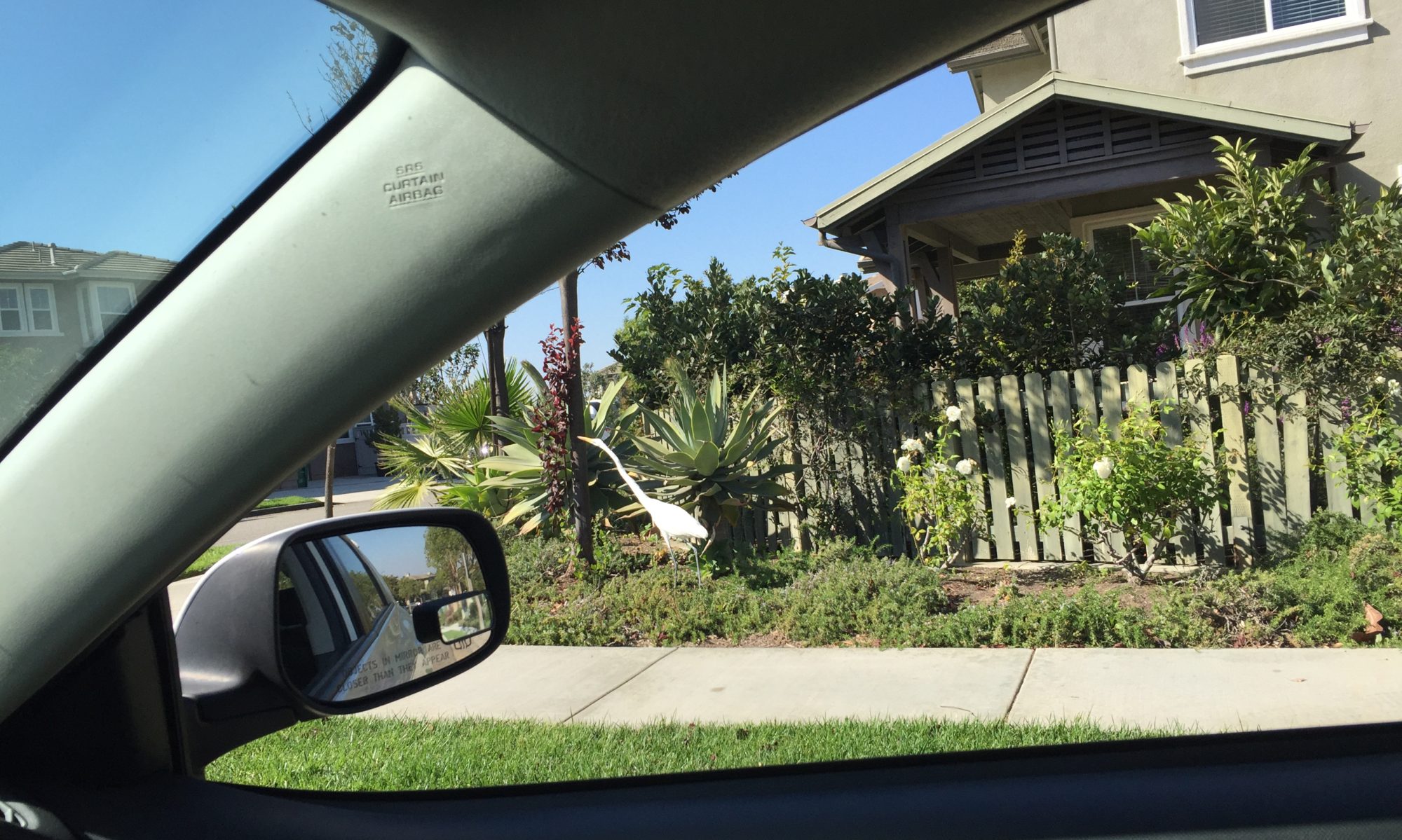
Lozeau’s Azure

I stare and fill my eyes with your light,
o sky devoid of trace of cloud,
pleasure unutterable, unavowed,
as azure beams converge in my sight.

This blue swells like a river inside,
a freshet rising up to the brim.
Immensity, without boundary or rim,
floods my humble soul, bearing it pride,

opening within, by sheer vibration,
a space made mine through contemplation,
who am a mere atom in vacuous space.

This deep blue, this torrent of eternity,
rolls on and spills into inner infinity,
as, dazzled, I watch myself evanesce.

***
After Albert Lozeau, «Lumière» Texte français

The bare mention of azure tips us off to what Lozeau (1878-1924) was reading in Montreal in the early years of the twentieth century. Are metaphysical yearning and, it follows, angst restricted in time or place? This is a question the largely bed-ridden poet seemed to be answering just by asking it in Canada. In any event, I have never seen azure more pure than that radiating through a mid-winter high pressure dropped down from Hudson’s Bay and settled onto the St-Lawrence. 

This and another translation of Albert Lozeau initially appeared in earlier versions in the bilingual poetry mag, Ellipse 38 (1987). They could well introduce a sequence of translations of depressive Canadian poets who wrote in French, including Émile Nelligan and Denys St-Garneau. This is a breed with which I felt much affinity in those years. On at least one occasion I partook of this same depressive mode in my poem Québec.

Yes, ye pedants, I know that Lozeau’s humble soul was already proud before it was flooded with immensity. But I have a poetic license.

Tell Me, James

These were the speaking notes for my brief eulogy of James Olney delivered at his home in University Hills, Irvine, on February 26, 2015. As they reveal, at several crucial points he had a major influence on the course of my life and career(s).  I didn’t see him much in the last few years, but his absence is palpable.  Here is his academic obituary.

  • Laura asked me to speak to James’s pre-Irvine life. So many memories from those years, beginning in 1967 at Cuttington College, in upcountry Liberia. James was first a mentor, then a friend. “Modest” even “reticent” are words I’ve heard applied to him. I would say “succinct”.
  • And generous towards others, even when critical. As one of our young colleagues there, Lois Johnson, wrote to me last week: “Those of us in the English department at Cuttington were the better for his encouragement and his willingness to trust our judgment regarding curriculum, and his respect for our opinion, especially considering how very green our own understanding was.”
  • Tell Me, Africa, was the fruit of that sojourn for him. It is being republished next month in Princeton UP Legacy Series. More important to me is that over forty years later African colleagues and friends still say to me “Olney got it right“.
  • It was at this time, in 1969. that I had to make a major decision, and James was my mentor in it. I was in Liberia not only to avoid the draft, but to avoid Grad School, about which I had misgivings. His words, engraven in my memory: “George, if you read and study and write, you’ll be happy enough, even in Canada“. He was right.
  • James was a mentor in many other fine things of life: food, wine, table conversation, but even animal husbandry. At one point I even baby-sat for a week with his pet spider monkey, Harriet.
  • But back to food and wine. Lessons in high hedonism, epicurianism, plus a network which lead to the five years I spent in the French import wine business. In Liberia, in Paris on furlough from Africa in the winter of 1968, and then after we left Liberia, in Solliès-Toucas, and in restaurants in Provence. I have this indeliable memory of returning late one night from some amazing meal, crammed between James and his brother Richard into the backseat of a small French car of yogurt-pot shape and size. His words that night: “If you’ve had a lot of wine for dinner, do not forget to put a glass of water at your bedside.”
  • I did keep in touch with James after the 70s. He had wonderful penmanship, and in those days letters were composed by hand. Around 2000, he wrote he had met and married Laura, that Marina was on the way, and that he was retiring to “some place in southern California”. Those weren’t his words, but mine: I didn’t know then where Irvine is. Only when I arrived here and stumbled across that envelop bearing his address on Los Trancos Drive, did I realize he lived only a few blocks away. You can imagine my delight.
  • In a kind of throw-back to earlier years, James and I were somehow on the same shopping schedules, crossing paths at Albertson’s or Bristol Farms instead of at Joseph Eid’s store-front grocery in Gbarnga, Liberia. So his mentoring continued, about where to get this wine or that cheese, but also how to age gracefully, and never lose your sense of humour.
  • Tell Me, James: now that would be a proper title for this short piece. James was a man of words and, apart from his beautiful, whimsical eyes, I remember him most for and through his words. Read, study and writeDon’t forget a glass of water. For 45 years I haven’t forgotten that glass of water. And I shall never forget James.