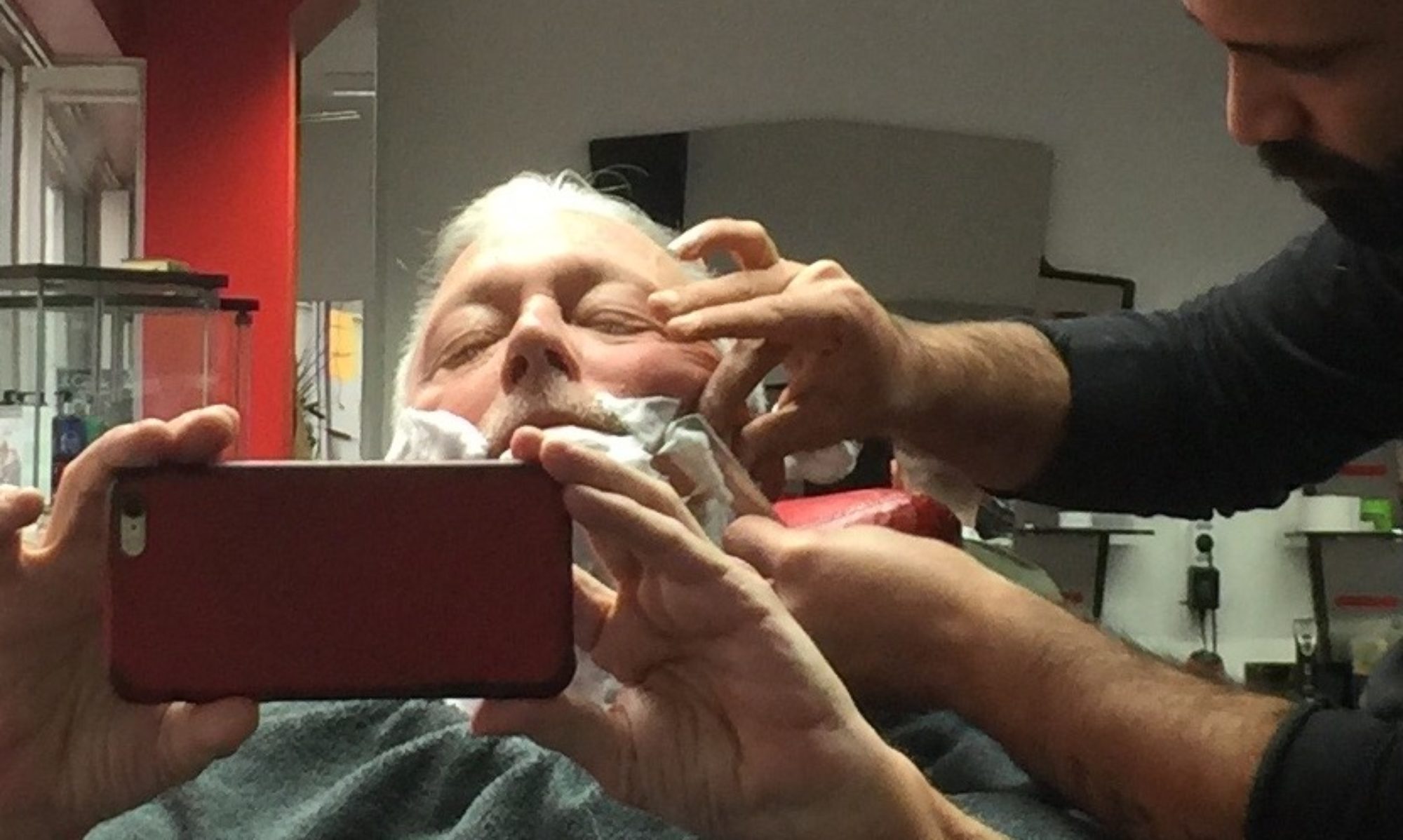
Why We Call It What It Is

wagga-cumulonimbus


Thrice this dreary winter I’ve dreamed the death
I died in Africa, not buff savanna nor undulating sands
but where the vertical panorama of cumulonimbus
is self-contained, where thunder claps call out
on their own, downpours taking up the theme.
Was it soma or coma? Hepatitis on the Pepper
Coast let my liver have the final say.

Quarantined, stunned with soporifics,
pinned against a sallow tumescent sky,
I felt the whole treacherous tropics gouge
into my guts, leaving me brittle bones from brow
to ribs to toes with shriveled pulp for viscera,
flaccid shrunken testes. My sap was hot with bile,
my shit pale clay, piss shit brown. Was I then to die?
Was this my unction, from a friendly mantis tacit prayer,
for incense the stench of coffee blossoms in fetid air?

A rooster crowed, a dog barked at a stooped
and wizened, demented old man. Myself, I saw.
Then all gravity cut loose. My bed became a bier
in surging currents, dipping down past pallid
shores whence no one I remotely knew beckoned.

Limbo? Purgatorio? Inferno? Whom are we supposed
to meet there, anyway? Fathers whose afflictions
we grow to share; lovers transmogrifying
in our arms; lumpen bums lurching at us to beg
change, faces chafed and skinned like the hindquarters
of small game, rubby veins blasted to the surface?

[We each live out protracted crises de foie.
We call it the liver because this gland strives
against death’s inward seepage. Mine did, and won.]

***
In Spring, 1968, when the whole planet seemed to be erupting, I was quarantined with hepatitis in West Africa, isolated from everyone else and put in the care of a Kpelle houseboy, James. I failed grossly at learning his language but I did have enough shards of it to exchange words, though not until after the katabasis  described above and my return to the surface. 

Did I merely dream that I was dying and descending into the underworld? Or was I actually dying but then made a miraculous recovery in the course of the fever in question?

The next morning I woke to find myself alive, as if washed up ashore on the near bank of some Styx, exhausted but suddenly hungry. 

Ngá ba mii? James asked, have you eaten, usually meaning rice, which is the main crop and fare of the Kpelle. I had eaten nothing for weeks in fact, so deep had been my nausea. It was just after dawn but I had this hankering for roast chicken and French fries.

Wéli tée, I replied. Returning from the dead enables one to speak. Within a couple of hours James obliged me with the best poulet frites I have ever eaten, though probably not the best thing for my liver at that stage of things.

Wine had to wait two more months. When I did return to alcohol, it was to frizzante early afternoon palm wine, one nectar of the many gods that be, this on my twenty-third birthday in July of the summer that was. 

Palm wine is something to catch as it goes. In the morning it is pure sap and juice, by noon it is spritzy and slightly intoxicating. As day goes on it turns more and more complex, fuller in flavour, sometimes sour, but more and more intoxicating.  As a Kpelle proverb has it, like a women. 

I was lucky that I had only hepatitis A , viral but not serum.  I was young. The afflicted lobe of my liver regenerated. That belaboured gland has held steady for almost fifty years against the glut of toxins I imbibe.

All that remained of my descent into the underworld was the bundle of words and images I have re-purposed here, though the suspension points betray the lack of an ending.
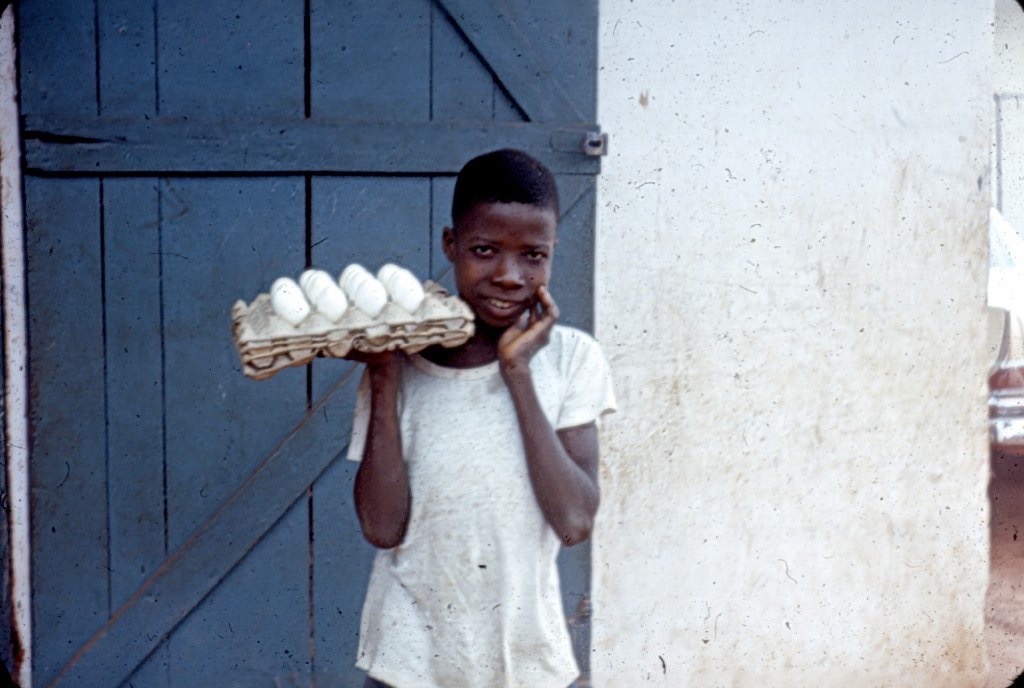
Boiled eggsMy photo of a Kpelle sma boi egg seller, Gbarnga, Bong County, 1968.  Head photo: https://en.wikipedia.org/wiki/Cumulonimbus_cloud.
< Memory the Mockingbird

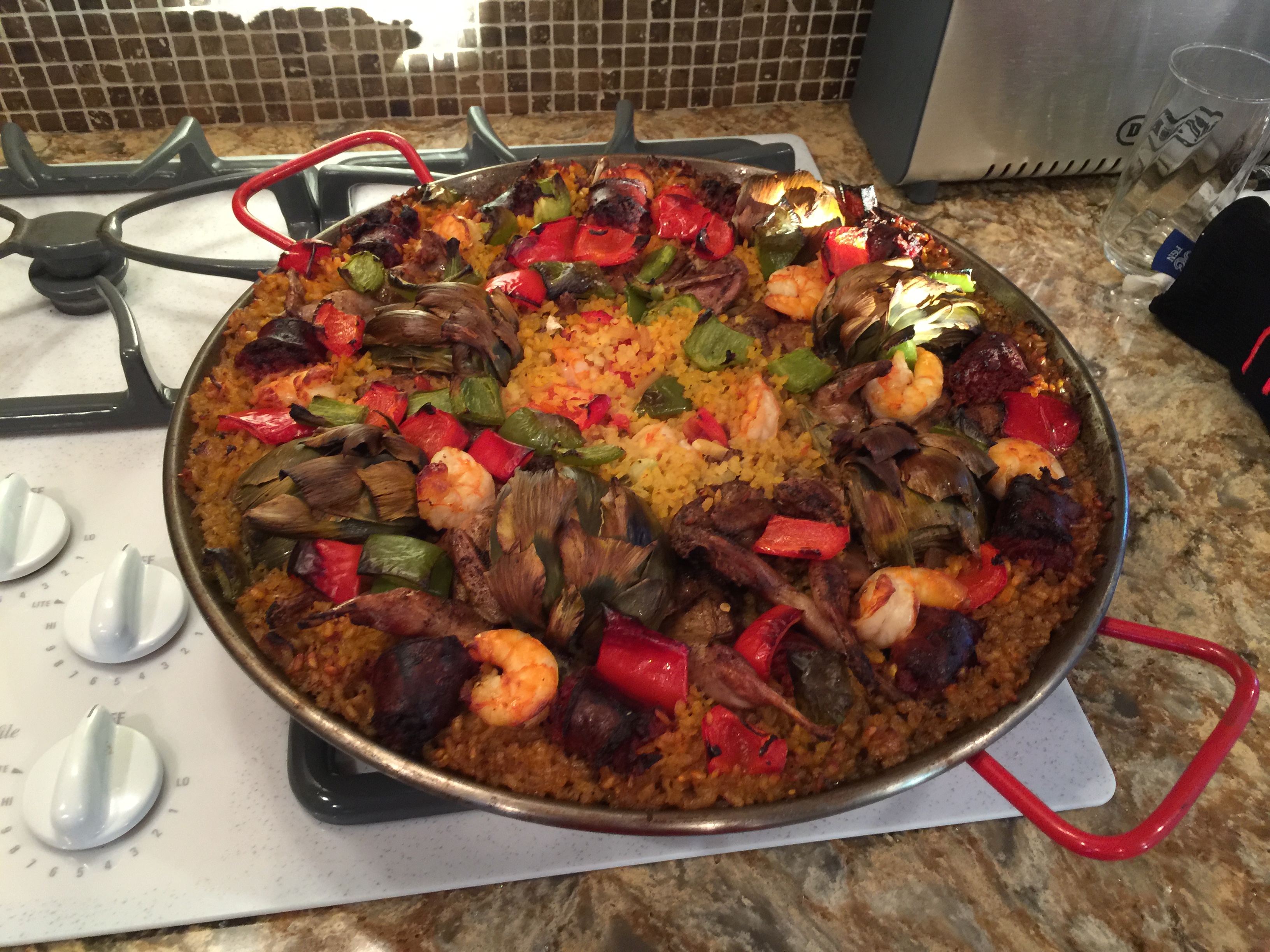
Quail Paella – Paella con codorniz

Paella is as much event as food, though argument persists about its right and wrong ingredients and the steps of its confection. I can’t conceive of one without imagining it cooked on a bed of coals on a beach. Purists claim pine and orange branches are a must. Rosemary cuttings would do the job, if you had an open fire.

I’ve never been someone to respect rules, culinary or not, but the confusion of variants in print and online means we have as much license as we wish so long as the spirit of the thing is respected. The dish should be not just rustic but hybrid in flavour. The main components, variously seafood, pork, poultry, hot sausage, garden vegetables and spices, should evoke open air and the smack of both chaparral and sea. That said, I have made both pescatarian and herbal vegetarian paellas. They appeared to please those whose personal tastes go that way.

The recipes call for saffron, no problem in our Persian-inflected household where the pestled powder from the stigma of crocus sativus (‘cultivated crocus’) is a staple always on hand. There is no substitute for its particular odour and aura, related chemically to iodine and chloroform. Yet let its absence not keep you from proceeding.

I don’t recall why quail leapt into this particular frying pan but I do know the artichokes followed from their freshness and cheap availability in the market where I shopped that morning.

This procedure might seem epic. It goes quickly with wine to hand.  If the composed paella is kept covered and warm, it can sit for as long as a hour while the guests socialize. And you too.

For a 16 inch pan:

4 or 5 quail cut in half
2 large chorizo-style sausages, e.g. Mexican loganiza
14 jumbo shrimp, perhaps shelled but definitely de-veined
2 1/2 cups of paella rice
2 large artichokes
2 sweet peppers, any colour
1 white onion
5 cloves of chopped garlic
small tin of unsweetened tomato paste (such as the Sadaf brand)
minced lemon zest
flat-leaved parsley torn into pieces
piperón (smoky paprika)
2 cups each of white wine and chicken stock
olive oil
saffranade (pinch of powdered saffron dissolved in a 1/4 cup of hot water)
harissa (to adduce a Moroccan note)
salt and pepper

For the quail rub: tumeric, sumac and oregano muddled in olive oil with salt and pepper

Serves seven

***
Split the quail in half. Wash and pat dry. Imbue
with the rub. Leave an hour or two, keeping cool.
With a serrated blade, cut off the top third
of each artichoke. Trim the stalks and quarter.
Shear off the leaf spines, working in a spiral.
Microwave in the steam of a covered dish
for four minutes. Cool, pry the fibrous chokes out.

In a skillet, not the paella pan itself,
saute the chorizo pieces, extruding
their fat. Put aside. Deglaze the residue.
Add a splash of olive oil. Brown the quail halves,
outer sides first. Do not overcook. Reserve.

In the same skillet make a sofrito of
onion, garlic, parsley,  lemon zest and piperón.
Join in the tomato paste, then wine or stock.
Reduce. Add the rice. Stir-fry at high heat
until glaucous, adding liquids enough to
keep the mixture from sticking or seizing up.
When the grains are opalescent but still hard,
turn in the saffranade. Simmer ten minutes.

Transfer the concoction into the heated
pan. Arrange the quail on their bed of rice,
around them the shrimp, chorizo, sweet peppers
and artichoke sections. Cover. Nothing now
to do until your guests show signs of hunger.
When ready to launch, pass the composition
into a very hot oven for fifteen minutes.

If the grains are not yet soft, add water
as required. Slip briefly back in the oven.
When done, for want of a fire pit on a beach
set the pan onto a stove burner to toast
the bottom layer of rice into a crust
called socarrat, from the Catalan spoken
in the hinterlands around Valencia.

Garnish with lemon wedges and parsley.
Provide harissa on the side. Serve with cool
red wine and paper towels. This food is hands-on.

IMG_2338