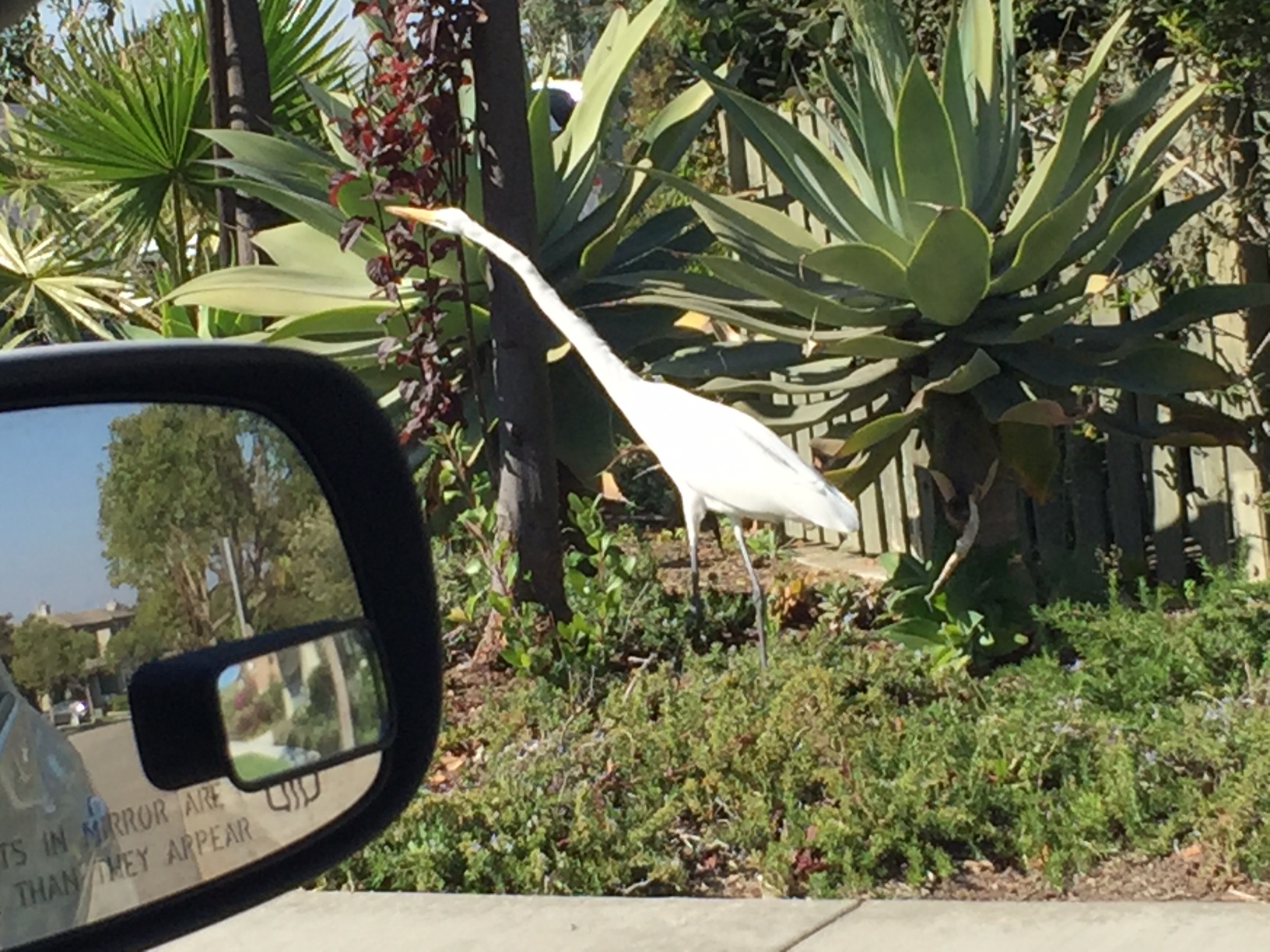
白鹭在 路边


How’s that for a catchy title? Bái lù zài lù biān.

This egret had flown over from the estuary to light on our front yard, already graced with palmetto and agave.

I set about wondering what the Mandarin is, afflicted as I have become with sinophilia, first relapse in almost forty years.

A few finger hops produced  heron, egret proper being 白鹭 bái lù, white heron.

Homophony is common in Chinese, therefore a regular poetic device. Once I noticed that the sound of  heron is the same as road 路 , and recalled the sound of 白 white bái, the colour of mourning and death, I what now seems instantaneously composed my first five character line of classical verse.

白鹭在 路边
bái lù zài lù biān
An egret lit on the roadside

Probably amateurish to a trained eye, but it’s my first one. Now I keep imagining where this verse can go.

Whoa minute! It already is a poem. If you are willing to allow I am the egret.
Sad to be a Child

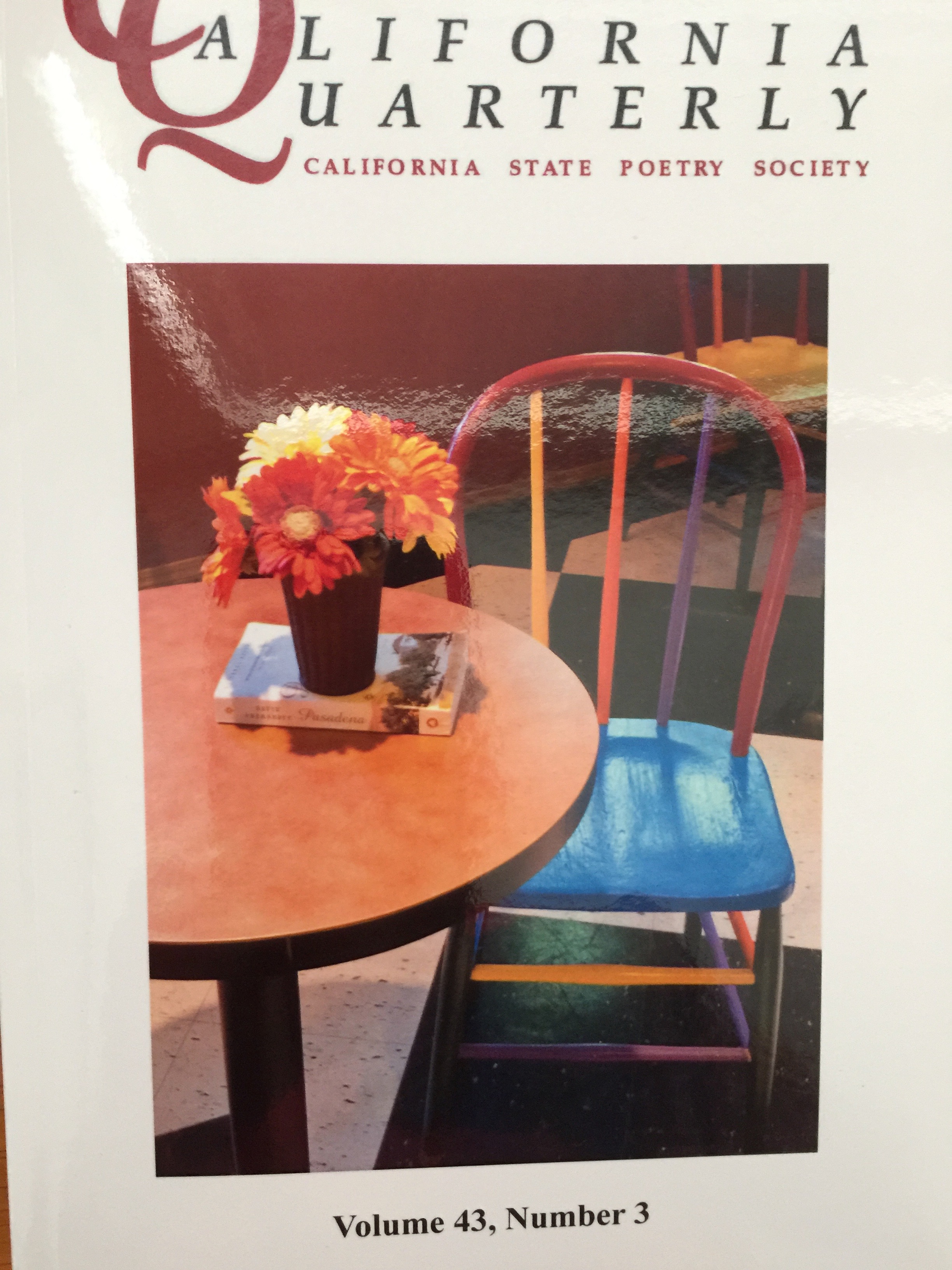
Hot off the presses, this poem which appears in California Quarterly, Vol 43, Number 3 (2017), p. 45.

You can order a copy at www.CaliforniaStatePoetrySociety.org

*

Sad to be a child.
However hard one watches,
branches never grasp the clouds,

stuff which drifts like moods
and slips between the crotches.
Sad to be a child

whose play becomes to brood
within a brushwood fortress
where branches never grasp the clouds,

whims are driven as if scuds
and wishes come in snatches.
Sad to be a child

in a copse where dream eludes
the anxious reach that clutches.
Branches never grasp the clouds

just encompass solitude
until someone approaches.
Sad to be a child.
Branches never grasp the clouds.

*

Notionally a French poetic form, the villanelle has been thoroughly nativized into English. Dylan Thomas’s “Do Not Go Gentle into that Good Night”, Theodore Roethke’s “The Waking” and Elizabeth Bishop’s “One Art” are among the best known and loved.