DeepSeek on Pastiche at Bandol
This poem intricately layers perception, artifice, and desire against the vivid, sensory backdrop of a Mediterranean port. The title, Pastiche at Bandol, signals the method: a conscious composition of borrowed textures, styles, and sensations—part observation, part artistic assemblage.
The opening stanzas ground us in hyper-real, tactile detail. The “pistachios of the sea” (mussels) with their “unscrubbed iodine / beards” are both natural and arranged, “animate rocaille” (living rockwork) set beside the glossy, iridescent fish. This is a still life, but one that insists on its own pungent, slimy vitality. The “unglaucous eyes” of the fish reject the dull patina of painted fish, staring instead at the real “saffrony mid-day.” The poet declares these the “makings of a fine bouillabaisse I shall not eat,” establishing a central tension: between the scene as a feast for the senses and the experience as one of conscious abstention, of savoring through observation and language alone.
The middle section shifts to the speaker’s position within the scene. The act of lifting the “chill glass goblet” with its “milky contents” (likely pastis with ice) becomes a ritual gesture. The view is framed—through the “dappled patch” of sea between moored yachts—like a composed painting. His uttered phrase, “à la bonne mienne,” (a colloquial toast, roughly “here’s to me”) is a quiet celebration of this private, artistic consumption. The poem then explicitly denies its own artifice: “This is no museum. This is not even / a glossy coffee-table book.” It insists on the ambient smells (Gauloises, geraniums, marine gas), the wet gleam on real cobbles, the “background babble / of a thousand words in Provençal French.” These elements are “part of this picture,” but a picture that includes the viewer’s “appetite whetted,” pushed by a longing to enter the “riotous pull / of lives I only imagine”—to try on and then shed those lives like clothes. The desire is for immersion, not preservation.
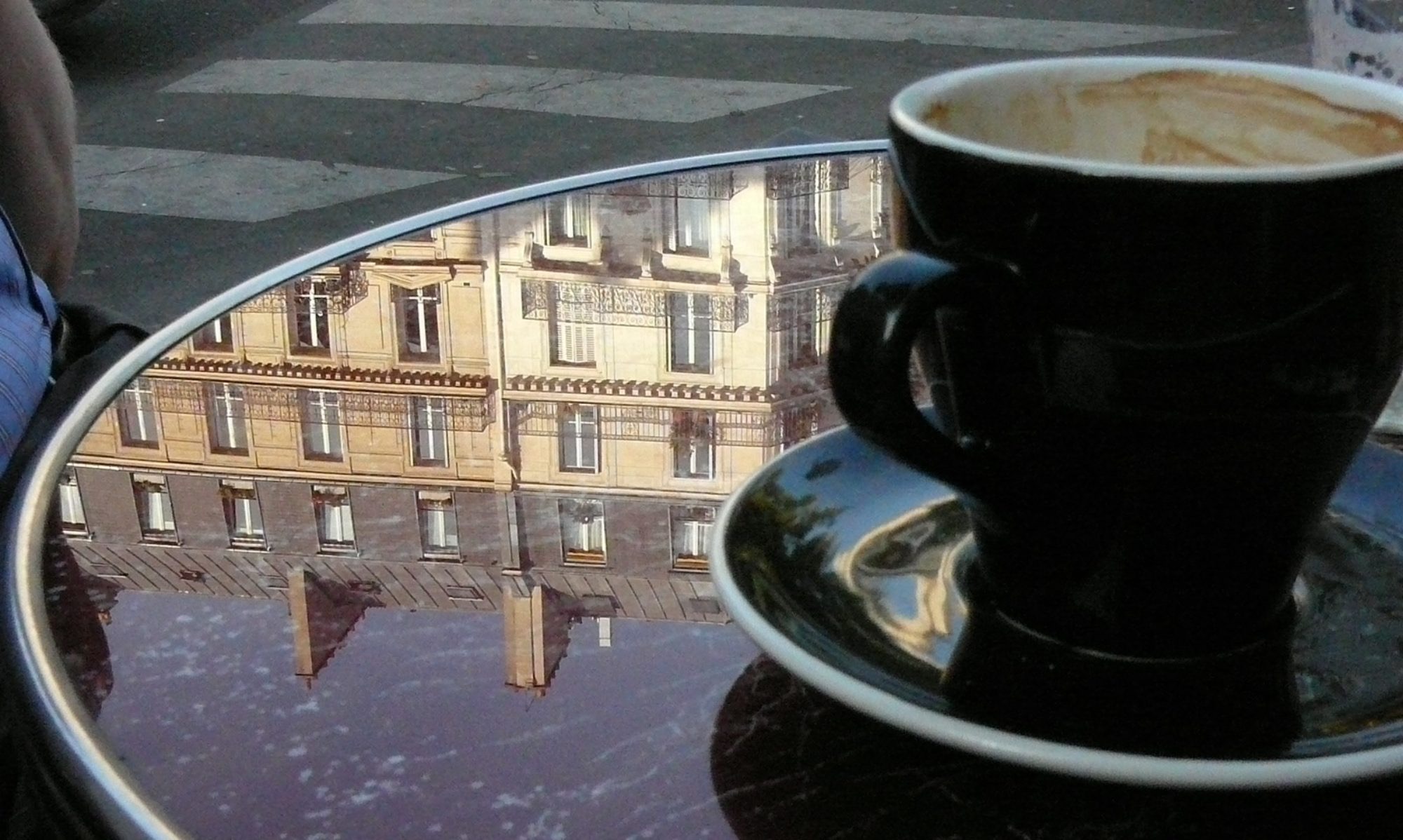
The final movement accepts the offered reality. The approaching garçon with his “porcelain plate of crudités” presents “an idea I had never / entertained.” The poem expands to include not just the meal, but the entire context: the kiosk, the newspapers, “this place to sit, eat, compose.” The act of composition is equated with the act of being present. The pastiche becomes the scene itself: the flapping signal flags, the scintillating façades in “undulating plein-air,” windows that exist in a liminal space, “open not in, not out.” The poem concludes with a masterful, condensed image: “the concavity of a simple spoon / reflects everything contained.” The spoon is both a humble utensil and a metaphysical instrument. Its curve captures and inverts the entire bustling port, the meal, the longing, the composition—holding the whole pastiche, the whole world of Bandol, in a single, shimmering, reflective surface.